How to Read Tire Sidewall Markings: Sizes, Ratings, and What They Mean
Choosing the right tires involves more than finding a set that fits your wheels. Tire size, load capacity, speed rating, treadwear, and construction all affect how your vehicle handles, rides, and performs.
That information is printed right on the tire's sidewall. The trick is knowing what the numbers, letters, and symbols actually mean.
Whether you're replacing the tires on your daily driver, upgrading a performance car, or selecting period-correct tires for a classic, understanding tire sidewall markings can help you make a better decision.
Here's how to read them and what to look for when choosing tires for different types of vehicles.
What Do the Numbers on a Tire Sidewall Mean?
Most modern passenger tires use a standardized size designation that includes the tire's dimensions, construction, load index, and speed rating.
For example, consider this tire size:
P225/65R17 102H
Here's what each part means:
Marking | Meaning |
P | Passenger vehicle tire |
225 | Tire section width in millimeters |
65 | Sidewall height expressed as a percentage of tire width |
R | Radial tire construction |
17 | Wheel diameter in inches |
102 | Load index |
H | Speed rating |
The aspect ratio is especially important when considering changes to tire size. In this example, the sidewall height is 65% of the tire's 225 mm section width.
A tire with a lower aspect ratio generally has a shorter sidewall relative to its width. This can affect steering response and ride comfort, although tire construction and suspension design also play important roles.
The wheel diameter must match the wheel being used. However, matching the diameter alone doesn't guarantee that a tire will fit correctly.
Understanding Tire Load Index Ratings
The load index tells you how much weight an individual tire is rated to support under specified operating conditions.
It's expressed as a two- or three-digit number that corresponds to a load capacity chart.
Here are a few examples:
Load index | Maximum load per tire |
91 | 1,356 lbs |
95 | 1,521 lbs |
100 | 1,764 lbs |
102 | 1,874 lbs |
110 | 2,337 lbs |
120 | 3,086 lbs |
These numbers represent rated tire capacities, not the weight of the vehicle or the amount of cargo it can safely carry.
For example, a passenger car might use tires with a load index in the 90s, while a heavier SUV or pickup may require higher-capacity tires.
The correct rating depends on the vehicle's weight, axle loads, tire type, and manufacturer requirements.
Never assume that a tire with a higher load index automatically increases your vehicle's payload or towing capacity. Those limits are also determined by the vehicle's design, suspension, brakes, axles, and other components.
When replacing tires, use the vehicle manufacturer's specifications and have any changes evaluated by a qualified tire professional.
What Do Tire Speed Ratings Mean?
The speed rating is the letter that usually appears after the load index. It indicates the tire's maximum rated speed under specified test conditions.
Common tire speed ratings include:
Rating | Maximum rated speed | Common applications |
S | 112 mph | Some passenger and touring tires |
T | 118 mph | Touring and everyday passenger vehicles |
H | 130 mph | Sedans, coupes, and performance-oriented touring tires |
V | 149 mph | Sport sedans and performance vehicles |
W | 168 mph | High-performance sports cars |
Y | 186 mph | High-performance and exotic vehicles |
These are examples of common applications, not rules for particular vehicle categories.
A speed rating is not a recommendation to drive at that speed. It represents a tested performance capability under specified conditions.
Speed ratings can also reflect differences in tire design, heat management, and intended performance characteristics.
However, a higher speed rating doesn't automatically mean better traction, shorter stopping distances, or a more comfortable ride.
For example, someone restoring a classic cruiser may have very different tire priorities from someone building a high-performance street car.
The important thing is to choose tires that satisfy the vehicle's required ratings and match how it will be driven.
What Is Tire Load Range? Understanding SL, XL, C, D, and E Ratings
Load index and load range are related, but they don't mean the same thing.
The load index identifies a tire's rated load capacity. Load range describes a tire's load-carrying classification and associated inflation requirements.
Standard Load (SL) and Extra Load (XL)
Passenger vehicle tires commonly fall into two categories:
- SL (Standard Load): Intended for standard passenger vehicle load requirements.
- XL (Extra Load): Designed to carry additional weight compared with a standard-load tire of the same size, when inflated according to its specifications.
Extra Load tires may be used on heavier passenger vehicles, performance cars, and some SUVs.
But XL doesn't mean the tire is automatically suitable for towing or heavy-duty truck applications.
Light Truck Load Ranges C, D, E, and F
Light truck tires may carry additional load range markings.
Load range | Traditional ply rating equivalent |
C | 6-ply rated |
D | 8-ply rated |
E | 10-ply rated |
F | 12-ply rated |
These are strength classifications based on historical ply ratings. A modern Load Range E tire does not necessarily contain ten actual plies.
Higher load ranges generally support heavier loads at their specified inflation pressures, but actual load capacity varies by tire size and construction.
For example, a light-duty pickup used primarily for commuting may not need the same tire construction as a truck regularly carrying heavy loads.
Choosing an unnecessarily heavy-duty tire can also affect ride comfort and handling.
The correct tire must meet the vehicle's load requirements without exceeding the wheel or vehicle manufacturer's specifications.
What Do Tire Treadwear, Traction, and Temperature Ratings Mean?
Many passenger tires carry three additional ratings known as Uniform Tire Quality Grading, or UTQG.
You might see something like:
TREADWEAR 400 — TRACTION AA — TEMPERATURE A
These ratings provide information about specific aspects of tire performance, but they're often misunderstood.
Treadwear Rating: How Quickly Is the Tire Expected to Wear?
The treadwear number is a comparative rating developed from controlled testing.
A tire rated 400 has a higher treadwear grade than one rated 200. However, that doesn't mean it will necessarily last twice as many miles in everyday driving.
Actual tire life depends on road conditions, driving habits, alignment, inflation, maintenance, and tire construction.
Higher treadwear ratings are often found on tires designed for longer service life, while some performance-oriented tires have lower ratings because they prioritize other handling characteristics.
For everyday drivers, treadwear is worth considering, but it shouldn't be the only factor in choosing a tire.
Traction Rating: AA, A, B, or C
The UTQG traction grade measures a tire's ability to stop on wet pavement during standardized straight-line braking tests.
The grades are:
- AA: Highest grade
- A: Second-highest grade
- B: Lower wet braking performance under the specified test
- C: Lowest grade
These grades do not measure every aspect of traction.
For example, they don't directly rate cornering performance, snow traction, hydroplaning resistance, or acceleration grip.
A tire with an AA wet traction grade isn't necessarily the best choice for winter driving or off-road use.
Temperature Rating: A, B, or C
Temperature grades describe a tire's resistance to heat generation and its ability to dissipate heat under controlled testing.
- A: Highest temperature performance grade
- B: Intermediate grade
- C: Minimum required performance level
Excessive heat can damage tires and contribute to failure.
Underinflation, overloading, and sustained high-speed driving can increase heat buildup, regardless of a tire's temperature grade.
UTQG ratings are most useful when comparing eligible passenger tires, and they aren't required on every tire category, including many light truck and winter tires.
What Do M+S and the Three-Peak Mountain Snowflake Mean?
Tire sidewalls may also carry markings related to their intended use in snow or muddy conditions.
M+S (Mud and Snow) is a designation based on tread design characteristics. It's commonly found on all-season and some light truck tires.
However, M+S alone doesn't mean a tire has passed a standardized winter traction test.
The Three-Peak Mountain Snowflake (3PMSF) symbol indicates that a tire has met a standardized performance requirement for traction on snow.
Some all-weather and all-terrain tires carry this symbol, as do many dedicated winter tires.
It's important to understand that the snowflake rating does not guarantee superior traction on ice or in every winter condition.
If you regularly drive in snow, ice, or freezing temperatures, choosing tires designed for those conditions is more important than relying on an M+S designation alone.
How to Read a Tire's DOT Date Code
Tires can become unsafe with age, even when they have plenty of tread remaining.
That's especially important for classic cars, show cars, and vehicles that spend most of their time in storage.
The DOT Tire Identification Number includes a four-digit manufacturing date code.
For example:
2524
- 25 means the tire was manufactured during the 25th week.
- 24 means the year was 2024.
The complete date code may only be visible on one side of the tire, so you may need to check the inward-facing sidewall.
Tire age matters because rubber compounds change over time. Exposure to heat, sunlight, storage conditions, and use can contribute to deterioration.
Some vehicle and tire manufacturers recommend replacement after six to ten years, regardless of remaining tread, but recommendations vary.
A tire should also be replaced earlier if it shows cracking, bulges, separation, damage, or other unsafe conditions.
For classic car owners, the lesson is simple: low mileage does not necessarily mean a tire is in good condition.
What Does Maximum Tire Pressure Mean?
You'll also find markings such as MAX PRESS and MAX LOAD on your tire's sidewall.
These identify the tire's maximum permissible inflation pressure and maximum load rating.
They are not instructions for how much air to put in your tires for everyday driving.
For a vehicle using its original tire configuration, the recommended cold inflation pressure is generally found on the tire placard, commonly located inside the driver's door opening, or in the owner's manual.
For modified vehicles or classics running non-original tire types or sizes, tire pressure may need to be determined using the tire specifications, vehicle loads, and appropriate professional guidance.
Inflating every tire to its sidewall maximum can lead to incorrect operating pressures and undesirable handling or wear.
Choosing Tire Ratings for Different Types of Vehicles
Understanding the markings is only half the process. The next step is choosing tires appropriate for your particular vehicle.
Classic and Vintage Cars
Classic car owners often have to balance original appearance with modern driving performance.
Older vehicles may have originally used bias-ply tires, which have different construction and handling characteristics from modern radial tires.
Switching to radials can change ride quality, steering feel, and handling. But compatibility with the wheels, suspension, steering system, and available clearances must be evaluated.
Some owners want authentic whitewall tires or period-correct sizing, while others prefer modern radial tires for regular driving.
It's also important to remember that vintage tire sizes may use different designation systems from modern tires.
For example, older numeric and alphanumeric sizes don't always have an exact modern equivalent.
A professional can help identify suitable replacements while considering tire diameter, load capacity, wheel compatibility, and the vehicle's intended use.
Daily Drivers and Touring Vehicles
For vehicles used primarily for commuting, errands, and highway driving, comfort, tread life, wet traction, and noise are often important priorities.
Touring and all-season tires are commonly designed around these needs.
But drivers should still choose tires that meet the vehicle manufacturer's load, speed, and dimensional requirements.
A tire with an impressive treadwear rating may not be the best choice if it compromises performance in the conditions where the vehicle is regularly driven.
Muscle Cars and Performance Vehicles
Performance cars often place greater demands on tires during acceleration, braking, and cornering.
Depending on the vehicle, performance-oriented tires may use lower-profile sidewalls, specialized tread compounds, and higher speed ratings.
However, a tire's speed rating alone doesn't determine its overall handling performance.
The vehicle's weight, power, suspension, wheel dimensions, and intended use all influence tire selection.
For a classic muscle car with modern engine or suspension upgrades, the best tire choice may differ considerably from the original factory specifications.
Trucks and SUVs
Trucks and SUVs may require tires designed for additional weight, towing, hauling, or rough terrain.
Some use passenger-type tires, while others require LT-rated tires with specific load capacities.
Highway-terrain, all-terrain, and mud-terrain tires offer different trade-offs involving road noise, tread life, traction, ride comfort, and off-road performance.
Load capacity is especially important for trucks used to haul or tow.
A tire's rating must be appropriate for the vehicle's actual operating requirements. Installing a tire with a higher load range does not increase the manufacturer's rated payload or towing capacity.
Why Tire Size Alone Isn't Enough for Custom and Classic Vehicles
Finding a tire that fits the wheel diameter doesn't necessarily mean it will work correctly on the vehicle.
This becomes particularly important when modifying classic cars or installing aftermarket wheels.
Other factors include:
- Overall tire diameter: Changes can affect gearing, speedometer accuracy, and clearance.
- Tire section width: Wider tires may contact suspension parts, body panels, or inner fenders.
- Wheel width: Each tire is designed for an approved range of wheel widths.
- Wheel offset and backspacing: These affect where the tire sits in relation to the suspension and body.
- Load capacity: The tires must safely support the vehicle under expected conditions.
- Brake and suspension clearance: Larger wheels or different tire profiles may introduce fitment problems.
For classic vehicles, preserving the correct stance and appearance is often part of the project. However, tire selection must also account for how the vehicle drives and handles.
If you're considering changing wheel diameter, read our guide to the advantages and disadvantages of bigger rims on classic cars.
Find the Right Wheels and Tires at D&C Classic Garage
The markings on a tire tell you what it's designed to do. Choosing the right tire means understanding how those specifications apply to your vehicle.
At D&C Classic Garage in Sparks, Nevada, we work with classic, vintage, and custom vehicles where wheel and tire selection can have a significant impact on appearance, fitment, and performance.
Whether you're restoring a classic to its original appearance, updating a muscle car, or exploring new wheel and tire options for a custom build, our team can help you evaluate the choices.
Explore our wheels and tires or contact D&C Classic Garage at (775) 420-5553 to discuss your project.
FREQUENTLY ASKED QUESTIONS
What do the numbers and letters on a tire mean?
Tire sidewall markings identify the tire's size, construction, load capacity, speed rating, and other specifications. For example, P225/65R17 102H describes a passenger tire that is 225 mm wide, has a 65% aspect ratio, fits a 17-inch wheel, and carries a load index of 102 and an H speed rating.
Is a higher tire speed rating always better?
No. A higher speed rating indicates a higher maximum tested speed capability, but it doesn't automatically mean better braking, traction, or ride comfort. The appropriate rating depends on the vehicle manufacturer's requirements and intended driving conditions.
What's the difference between tire load index and load range?
The load index is a numerical code indicating a tire's rated load capacity. Load range is a classification related to load-carrying capability and inflation requirements. Both are important when selecting tires, particularly for trucks and heavier vehicles.
Does a higher treadwear rating mean a better tire?
Not necessarily. A higher UTQG treadwear number indicates a higher comparative wear rating under controlled testing, but it doesn't guarantee a specific mileage. Different tires prioritize tread life, traction, comfort, and performance differently.
What does XL mean on a tire?
XL stands for Extra Load. It identifies a passenger tire designed to carry more weight than a standard-load tire of the same size when operated at the appropriate inflation pressure.
What does Load Range E mean?
Load Range E is a light truck tire load classification traditionally associated with a 10-ply rating. It does not mean the tire necessarily contains ten physical plies. Actual load capacity depends on the tire size and inflation specifications.
Do classic cars need special tires?
Some classic vehicles require special consideration because their original tire sizes, wheels, suspension systems, and steering characteristics differ from modern vehicles. Period-correct tires and modern radial alternatives may both be available, depending on the vehicle.
Can I install larger tires on my classic car?
Possibly, but tire diameter, width, wheel dimensions, clearance, load capacity, and vehicle handling all need to be considered. A professional fitment evaluation can help determine whether a different size is appropriate.
How can I tell how old my tires are?
Look for the four-digit manufacturing date at the end of the DOT Tire Identification Number. The first two digits represent the week of manufacture, and the last two represent the year. For example, 2524 means the 25th week of 2024.
What is the difference between M+S and the snowflake symbol?
M+S is a mud-and-snow designation based on tread characteristics. The three-peak mountain snowflake symbol identifies tires that have passed a standardized snow traction test. The snowflake symbol provides a more meaningful indication of tested snow performance.
RELATED POSTS

Choosing the right tires involves more than finding a set that fits your wheels. Tire size, load capacity, speed rating, treadwear, and construction all affect how your vehicle handles, rides, and performs.
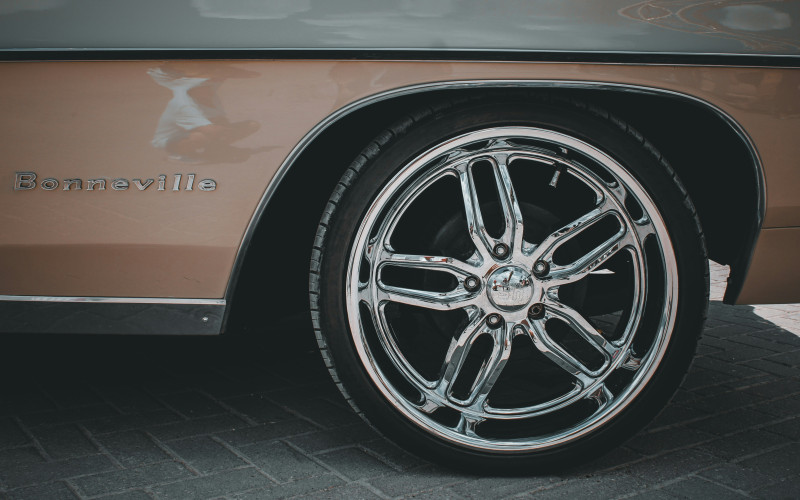
Big rims on cars can transform a classic from a charming relic into a head-turning showpiece. They also change how the car rides, steers, and holds its value. Before you spend money on a new set, you should understand exactly what bigger wheels do to a vintage machine.

Owning a classic car means balancing two things at once: preserving its character and keeping it genuinely safe to drive. Nowhere does that balance matter more than with your braking system. A vintage engine rebuild or a fresh coat of paint might turn heads at a car show, but worn brakes can turn a Sunday drive into a real emergency.
If you own a classic car, you already know that engine oil is the lifeblood of a vintage powertrain. Older engines tend to run tighter tolerances in some areas and looser ones in others, which means oil does more than lubricate. It cushions worn components, carries away heat, and protects metal surfaces that have seen decades of use. Knowing how to check engine oil the right way can be the difference between a weekend cruise and a costly rebuild.
